GitHub Copilot Code Review Is Now an API. The Hard Part Still Starts After Merge.
GitHub made Copilot code review easier to automate. That is useful. It also makes the next question harder to ignore: after the review is green, who is watching the exact revision when real users arrive?
You know the moment.
The pull request has comments. The obvious bug is fixed. Tests are green. The reviewer—human, AI, or both—has nothing else blocking the merge. The change goes out.
For a few minutes, everything feels finished.
Then production starts answering questions the pull request never could.
A payment callback behaves differently with real data. One route gets slow under traffic. A browser-specific error appears. A third-party service times out. The code was reviewed; the system still found a new way to fail.
The GitHub Copilot Code Review API changes the workflow—not the definition of “done”
The new API support matters because it removes friction from something engineering teams are already trying to automate.
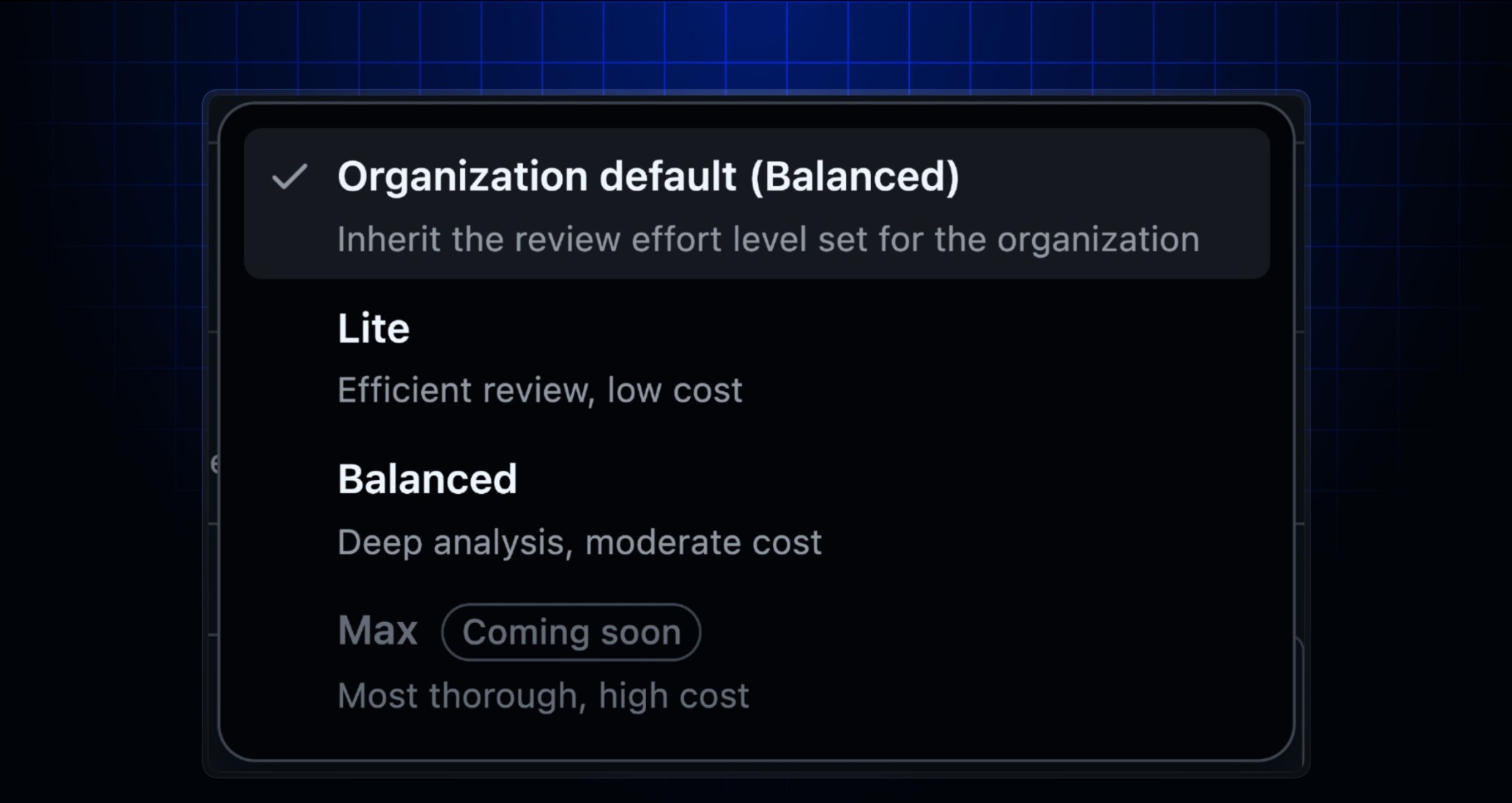
Before this update, Copilot code review could already be requested inside GitHub and configured for automatic review. Now a team can request a review from supported REST and GraphQL APIs and set the review effort for that request. In plain English: code review can be triggered from the systems your team already uses instead of living behind one more manual click.
That opens useful paths. A deployment workflow can request review at a specific point. An internal platform can wrap review into its own release process. A small team can remove another repetitive handoff without removing the person who owns the decision.
And the default got deeper.
GitHub says Balanced is designed for more thorough analysis of complex logic, security-sensitive code, and changes that cross services. Lite remains the more economical option for routine changes. Balanced consumes more AI credits and may use slightly more GitHub Actions minutes.
That is a sensible trade: spend more reasoning where mistakes cost more.
But it is still reasoning about a change before that change has lived in the world.

Why this matters more in an AI-heavy codebase
AI changed the economics of writing software faster than it changed the economics of understanding software.
A founder can ask an agent to add billing, refactor an API, change authentication, touch a database migration, and rewrite the error handling before lunch. The code may arrive in minutes. The responsibility for understanding what changed does not.
That is the pressure behind the current wave of AI review tools: if code arrives faster, feedback has to arrive faster too.
The risk is not using AI to review AI-generated code. That can be genuinely helpful. The risk is confusing faster feedback with complete evidence.
GitHub itself draws that boundary clearly. Its responsible-use documentation says Copilot may miss code-quality problems, especially in large or complex changes. It can also produce false positives. GitHub recommends supplementing Copilot code review with careful human review, and says generated code suggestions should be reviewed and tested before adoption.
A review can tell you what looks wrong in the change. Production tells you what is actually going wrong for users.
A Copilot review comment is useful. It is not production telemetry.

This is where a lot of “AI code quality” conversations quietly stop.
The reviewer sees the repository, the diff, available context, tests, instructions, and whatever tools the review system is allowed to use. That is valuable evidence. It can catch bugs early, explain suspicious logic, flag risky changes, and shorten the time between writing and feedback.
Production adds a different category of evidence:
- real traffic patterns;
- real user data and unexpected states;
- browser and device differences;
- third-party APIs behaving badly;
- latency between services;
- deployment and environment configuration;
- release-specific errors;
- slow requests that only appear under load;
- users who are actually affected.
You cannot “review” all of that out of existence before merge.
| Before merge: code review | After deploy: runtime monitoring |
|---|---|
| What looks risky in this change? | What is failing for real users now? |
| Source diff, repository context, tests, static evidence | Errors, affected users, slow requests, Web Vitals, releases, alerts |
| Suggests what may need to change | Shows whether the deployed system is actually healthy |
| Runs before the release decision | Continues after the release decision |
These are not competing jobs. They are two halves of a mature feedback loop.
The uncomfortable question: who verifies the AI-generated fix?
Once AI can write the code and review the code, the next step feels obvious: let AI fix what AI found.
Sometimes that is exactly the right move—provided the fix is treated as a new change rather than a magical ending.
A 2026 preprint on an automated vulnerability-detection and remediation pipeline illustrates why. Across the configurations studied, remediation reduced many static-analysis findings, but the generated remediation also introduced new vulnerabilities in roughly 15% to 22% of cases. That paper is a preprint, not universal proof of how every AI coding system behaves. Still, the operational lesson is hard to argue with: a generated fix deserves another verification pass.
The safer loop is deliberately boring:
- Detect the problem.
- Investigate the evidence.
- Draft or apply a fix.
- Treat the fix as a new revision.
- Run the relevant checks again.
- Keep a human release decision.
- Watch the deployed revision in production.
Speed comes from making that loop cheap. Trust comes from not pretending the loop disappeared.
Where QC Guard fits into that picture
This is the reason Codie QC Guard is designed as a lifecycle rather than a single “scan” button.
QC Guard connects only the GitHub repositories and branches the user selects. Relevant changes can create an advisory report tied to the selected branch and the exact source revision, preserving evidence for what was actually reviewed at that point in time.
That revision can be reviewed across nine advisory guard areas: business logic, architecture, security, performance, compliance controls, quality, testing, deployment readiness, and analysis integrity. Importantly, missing or inconclusive evidence is not presented as a pass.
Then the process keeps going after deployment. With separate runtime setup, QC Guard can surface production errors, affected-user counts, slow requests, Web Vitals, release context, source-map status, and alerts in the Codie dashboard.
And the final control stays human. QC Guard can explain a finding, investigate it, or draft remediation. It does not automatically merge or deploy repository changes.
That distinction matters more—not less—as AI systems become capable of reviewing and repairing their own output.
So is QC Guard a replacement for GitHub Copilot code review?
No. That framing would miss the point.
GitHub Copilot code review is becoming a more programmable reviewer inside the pull-request workflow. The new API makes that reviewer easier to call from your own systems. GitHub is also adding controls around review depth, automation, and approvals.
QC Guard is aimed at a broader operational question: how do you connect a reviewed source revision to quality evidence, preserve the decision trail, keep remediation under explicit control, and continue watching the application once it is live?
For an AI-heavy team, the sensible answer may be to use both layers well.
Use automated review where it removes waiting. Keep deterministic testing, security analysis, repository rules, and human judgment where they matter. Then make sure the release does not become invisible the moment the merge button disappears.
A practical production-minded workflow
- Let developers and coding agents move quickly. Fast code generation is a feature, not something to apologize for.
- Trigger AI review automatically where it saves time. GitHub’s new API support makes this easier to integrate into existing workflows.
- Keep deterministic checks beside the model. Tests, static analysis, dependency/security scanning, build checks, and repository rules should not vanish because an AI reviewer is available.
- Treat AI findings as evidence, not authority. A confident comment can still be wrong.
- Re-check AI remediation. A fix is a new code change.
- Tie your quality record to the exact revision. “We reviewed the code” is weaker than “we reviewed this revision with this evidence.”
- Keep explicit merge and deployment control. Someone should still own the release decision.
- Watch production after release. Errors, affected users, performance, releases, and alerts belong in the quality story too.
- Feed runtime evidence back into the next review. The best quality loop gets smarter from what actually happened, not only from what was predicted.
This is not slower than “AI everywhere.” Done well, it is what lets AI move quickly without turning every release into an act of faith.
Keep the review. Keep watching after release.
QC Guard connects selected GitHub changes to exact-revision quality evidence, nine advisory guard areas, human-controlled remediation, and separate runtime health monitoring for live applications.
FAQ: GitHub Copilot Code Review API
Can GitHub Copilot code review be triggered through an API?
Yes. GitHub announced on October 2, 2026 that Copilot code review can be requested through supported REST and GraphQL APIs. A request can also specify the review effort level.
What does Balanced review effort mean?
Balanced is GitHub’s deeper review effort for complex logic, security-sensitive code, and cross-service changes. GitHub made Balanced the built-in default for repositories and organizations using Copilot code review unless Lite had been explicitly selected.
Can GitHub Copilot approve pull requests?
GitHub says Copilot normally leaves a Comment review by default. Organizations and repositories can configure approval behavior, and Copilot approvals are currently documented as a public-preview capability.
Does AI code review replace human review?
No. GitHub’s responsible-use guidance says Copilot can miss problems and produce false positives, and recommends supplementing Copilot code review with careful human review.
Why monitor production after a code review passes?
Because the review evaluates the proposed source change before release. Runtime monitoring shows how the deployed revision behaves with real traffic, data, integrations, devices, browsers, and user behavior. One predicts risk; the other observes reality.
How is QC Guard different from a pull-request AI reviewer?
QC Guard combines GitHub-connected exact-revision review with nine advisory guard areas, preserved evidence, human-controlled remediation, and separate runtime monitoring for live applications. It is designed as an ongoing quality lifecycle rather than only a pull-request review step.
Sources
- GitHub Changelog — “Copilot code review: API support and new default effort level” (October 2, 2026)
- GitHub Docs — About GitHub Copilot code review
- GitHub Docs — Responsible use / limitations of Copilot agents
- GitHub Docs — Using GitHub Copilot code review on GitHub
- GitHub Docs — Configuring code review by GitHub Copilot
- Surikov, M. — “Securing AI-Generated Code: A Just-in-Time Vulnerability Detection and Remediation Pipeline” (preprint, 2026)
- Codie Marketplace — QC Guard